

Inflation Reduction Act
How the US Inflation Reduction Act can fuel building decarbonization
With inflation rates so high, building decarbonization is increasingly urgent – the US inflation reduction act presents opportunities to reduce emissions and improve affordability
How is Decarbonization Related to Inflation?
According to the Roosevelt Institute, fossil fuel-based energy systems have a significant influence on the current state of rapid inflation.
Volatile fuel prices have been an important trigger of recessions in the past, and moving away from our current reliance on fossil fuels could reduce the likelihood or frequency of future recessions.
High inflation has meant higher interest rates, which disproportionately affect clean energy projects over fossil fuel-based energy production projects.
Solar and wind require a higher upfront investment than coal or gas fired power plants, and despite the lower ongoing costs, the interest on the larger upfront loans to develop clean energy sources, compared to smaller, spread-out loans for fossil fuel plants, can mean the clean projects are no longer feasible.
What now?
As a response, the Biden-Harris administration has developed the inflation reduction act, which includes specific building decarbonization incentives.
Although increasing interest rates are an important tool to reduce inflation, taking a systems approach with inflation reduction measures across the economy is key, including:
Ensuring that clean energy plants; and
building decarbonization is funded.
The incentives will help us:
Reduce our reliance on fossil fuels and in turn reduce the effect that oil prices and the world events that drive them will have on inflation, ensuring a more stable, reliable and equitable economic environment.
Along with building decarbonization, switching to clean energy sources is an essential strategy to help curb inflation and reduce GHG emissions.
Although the rising price of fossil fuels makes for high inflation that we have all felt, it theoretically presents an economic shift where switching to clean energy becomes more affordable than ‘business as usual’, creating an opportunity where it makes economic and environmental sense to invest in clean energy.
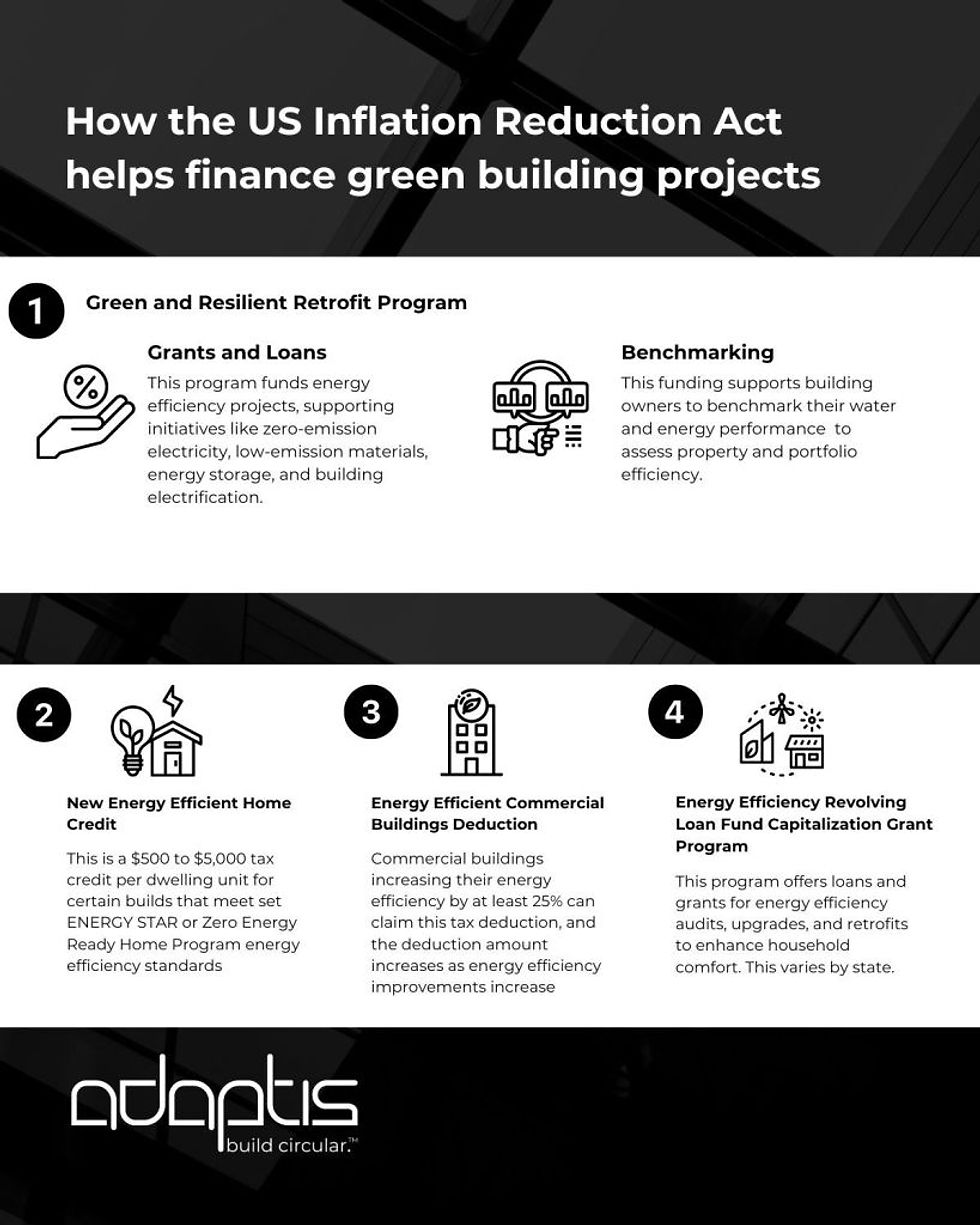
See below for some examples of how the Inflation Reduction Act can fund building decarbonization.
Sources
The White House. (2023, January 9). Building a clean energy economy: a guidebook to the inflation reduction act’s investments in clean energy and climate action. https://www.whitehouse.gov/wp-content/uploads/2022/12/Inflation-Reduction-Act-Guidebook.pdf
Melodia, L., Karlsson, K. (2022, May 11). Energy price stability: The peril of fossil fuels and the promise of renewables. Roosevelt Institute. https://rooseveltinstitute.org/publications/energy-price-stability/
Keating, D. (2022, October 12). Can renewables solve the inflation crisis? Energy Monitor. https://www.energymonitor.ai/regulation-policy/can-renewable-energy-solve-the-inflation-crisis/?cf-view
Tankersley, J., Plumer, B. (2023, December 5). Renewable energy could be a casualty in the war on inflation. Here’s why. The New York Times.


Comments